
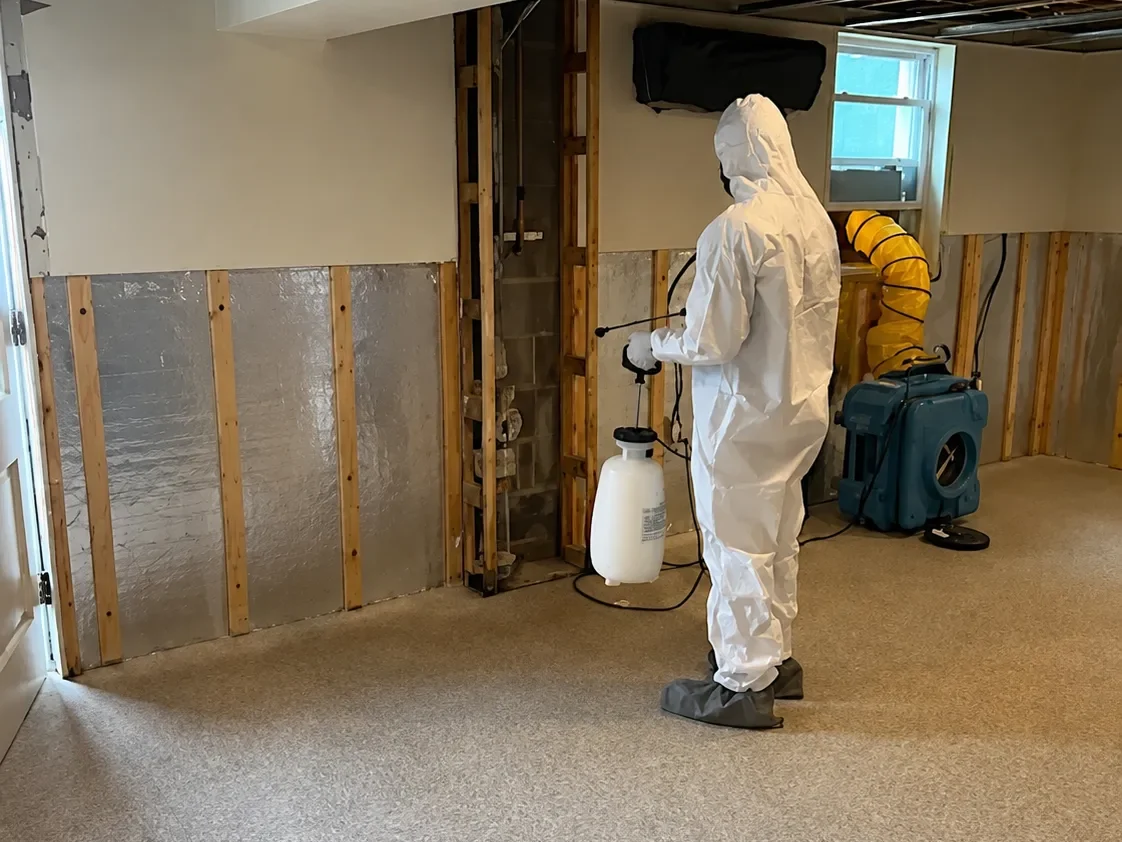
Why Mold Keeps Coming Back
You clean the mold from the wall. It looks better.
A few months later, it’s back.
Or maybe you’ve gone further than that. You’ve replaced drywall, run a dehumidifier, had somebody treat the affected area, or even paid for professional remediation. Then one day you notice that familiar discoloration again, or the musty smell you thought was gone starts creeping back.
It’s frustrating. And when you’ve already spent money trying to solve the problem, it can be especially hard to understand why mold keeps coming back.
At Mold Patrol, we look at recurring mold a little differently. Mold growth matters, but what you can see is often only one part of the problem. If the conditions that allowed it to grow are still present, cleaning the mold doesn’t necessarily change those conditions.
That’s why we spend so much time looking at moisture.
High indoor humidity. A crawl space that stays damp. A leaking condensate line. Poor exterior drainage. A plumbing leak. Condensation. Water entering around a roof or flashing. Sometimes the source is obvious. Sometimes it takes some detective work.
But the principle stays the same: if you want a lasting solution, you have to understand what’s feeding the problem.
- Mold Is the Symptom. Moisture Is the Cause.
- Why Mold Comes Back After Cleaning or Remediation
- Relative Humidity and Condensation Can Feed Mold Without an Obvious Leak
- Crawl Space Moisture Can Keep Feeding the Problem Above You
- Basements, Roof Leaks and Hidden Water Damage Can Be Easy to Miss
- Wet Materials Need Attention Quickly
- What a Lasting Mold Solution Actually Looks Like
- Stop Treating the Same Symptom Over and Over
Mold Is the Symptom. Moisture Is the Cause.
One of the first things Mold Patrol co-owner Brian Murphy looks at when mold keeps coming back is what’s happening with moisture in the building.
As Brian puts it:
“Mold is the symptom. It’s not the cause. Right? So the cause is moisture.”
Brian Murphy
That doesn’t mean the mold itself isn’t a problem. Of course it is. The point is that visible mold growth doesn’t appear in a vacuum.
Mold needs several things to grow. It needs oxygen, which is obviously everywhere in a home. It needs a food source or surface where growth can occur. And it needs moisture.
That last part is where homeowners have some control.
The moisture may come from elevated relative humidity. It could come from a leak, water intrusion, condensation, a damp crawl space, an HVAC problem, or several conditions happening together. Whatever the source, increased moisture creates more favorable conditions for mold growth.
That’s why simply asking, “How do we get this mold off the wall?” can be the wrong first question.
The better question is, “Why did mold grow here in the first place?”
Brian explains it this way:
“The cause or the origin is, as always, going to be, you know, moisture or elevated relative humidity or a water intrusion or a leak. You know, the mold is a byproduct.”
Brian Murphy
This distinction matters when you’re dealing with recurring growth.
If mold keeps coming back in the same bedroom, around the same HVAC register, beneath the same sink, or throughout the same crawl space, there’s usually a reason the environment continues to support it.
Sometimes homeowners already know what that reason is. There may have been a plumbing leak or water damage after a storm.
Other times, there’s no dramatic water event at all.
That’s where mold moisture control becomes such an important part of the conversation. The goal isn’t just to get something visibly clean. It’s to understand whether moisture is still entering the structure, accumulating in materials, or remaining elevated in the air.
If you’re treating the same mold problem again and again, it may be time to stop treating the symptom and find out what’s actually feeding it. Mold Patrol can inspect both the visible problem and the moisture conditions behind it.
Why Mold Comes Back After Cleaning or Remediation
There’s a big difference between addressing what you can see and solving the whole problem.
A person may remove a piece of mold-damaged drywall, clean a wooden surface, use an antimicrobial product, or vacuum an affected area. In the right circumstances, those may all be parts of a remediation process.
But none of them automatically fix a leak.
They don’t lower excessive indoor humidity by themselves.
They don’t repair an HVAC condensate drain.
They don’t improve exterior drainage.
And they don’t stop moisture from evaporating out of exposed soil beneath a crawl space.
That’s one of the biggest reasons why mold keeps coming back after cleaning or incomplete remediation.
Removing Mold Isn’t the Same as Removing the Cause
Brian sees the distinction clearly when he inspects homes.
“Anybody can come in and have a vacuum and treat the antimicrobial and try to kill and remove mold spore. But unless you’re correcting the conditions that cause it… it’s always going to come back.”
Brian Murphy
A thorough professional mold remediation process needs to consider more than the affected material. It needs to consider what the building is doing around that material.
Is humidity elevated?
Is water entering somewhere?
Was there previous water damage that never fully dried?
Are there issues with ventilation or airflow?
Could the crawl space, HVAC system, roof, basement, plumbing, or drainage be contributing?
Brian says that when Mold Patrol carries out an inspection, they’re looking for both sides of that equation: physical evidence of mold and conditions that are conducive to mold growth.
Think About a Leaking Boat
Brian uses a simple analogy with homeowners.
“If you’re in a boat and you’re taking on water and you get five guys in there with buckets and you bail all that water out, but you don’t plug the holes… you’re gonna take on more water, and eventually, you’re gonna sink.”
Brian Murphy
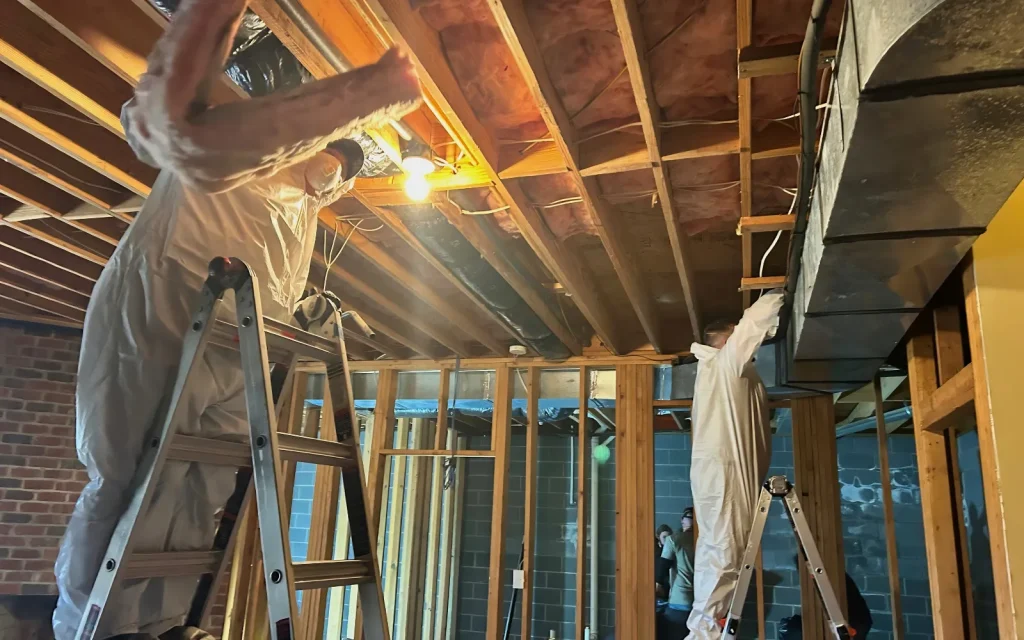
That’s essentially what happens when recurring mold is treated without correcting the conditions behind it.
You can keep bailing.
You can keep cleaning.
You can keep replacing materials.
But if the hole in the boat is still there, you’re doing the expensive part over and over without solving the reason you needed to do it in the first place.
As Brian summed it up during our interview, “you have to address the root cause if you want to effectively remediate the problem.”
Already paid to address mold once and now you’re seeing it again? Don’t automatically repeat the same treatment. Mold Patrol can help determine whether an unresolved moisture source is keeping the cycle going.
Relative Humidity and Condensation Can Feed Mold Without an Obvious Leak
When people think about water damage, they often picture something dramatic: a pipe bursts, the roof leaks, or water pours across the floor.
But you don’t need standing water for a moisture problem to develop.
Sometimes the problem is in the air.
Brian recently inspected a 120-year-old farmhouse where the homeowner knew something wasn’t right but didn’t realize how extensive the moisture conditions had become.
During the inspection, relative humidity readings were around 74% to 78%. When Brian examined wooden furniture with his inspection light from different angles, visible mold growth could be seen across numerous pieces.
The source wasn’t simply “an old house.”
One of the property’s two HVAC systems had a condensate line that wasn’t draining correctly. Moisture was building up in the system, and because air was shared throughout the property, those conditions affected more than one isolated area.
“The air circulation throughout the home contains a higher level of moisture, which then caused elevated relative humidity, which then attracted mold spore.”
Brian Murphy
That’s an important lesson if mold keeps coming back even though you can’t find an obvious leak.
How High Should Indoor Relative Humidity Be?
Brian generally likes to see indoor relative humidity controlled so it doesn’t remain above roughly 55% to 58% for extended periods.
That aligns closely with broader federal moisture-control guidance. The U.S. Environmental Protection Agency recommends keeping indoor relative humidity below 60% when possible and ideally between 30% and 50%.
Read the EPA’s mold and moisture guidance
A simple humidity meter can give you useful information, but the number is only part of the picture.
If you consistently see elevated readings, the next question is why.
- Is outside humidity entering the home?
- Is your HVAC equipment functioning and draining correctly?
- Is there poor airflow?
- Is moisture entering from a crawl space or basement?
- Is condensation collecting on cold surfaces?
- Has the building been sealed or insulated in a way that’s reducing its ability to manage moisture effectively?
Those are the questions that turn a humidity reading into useful information.
And it’s worth remembering that a newer home isn’t automatically immune. Brian says Mold Patrol inspects newer properties with mold and moisture issues too, sometimes because of construction defects or because the right preventive measures weren’t considered when the home was built.
If you want to understand this issue in more detail, our guide to how relative humidity affects mold growth goes deeper into what homeowners should monitor and what elevated readings can tell you.
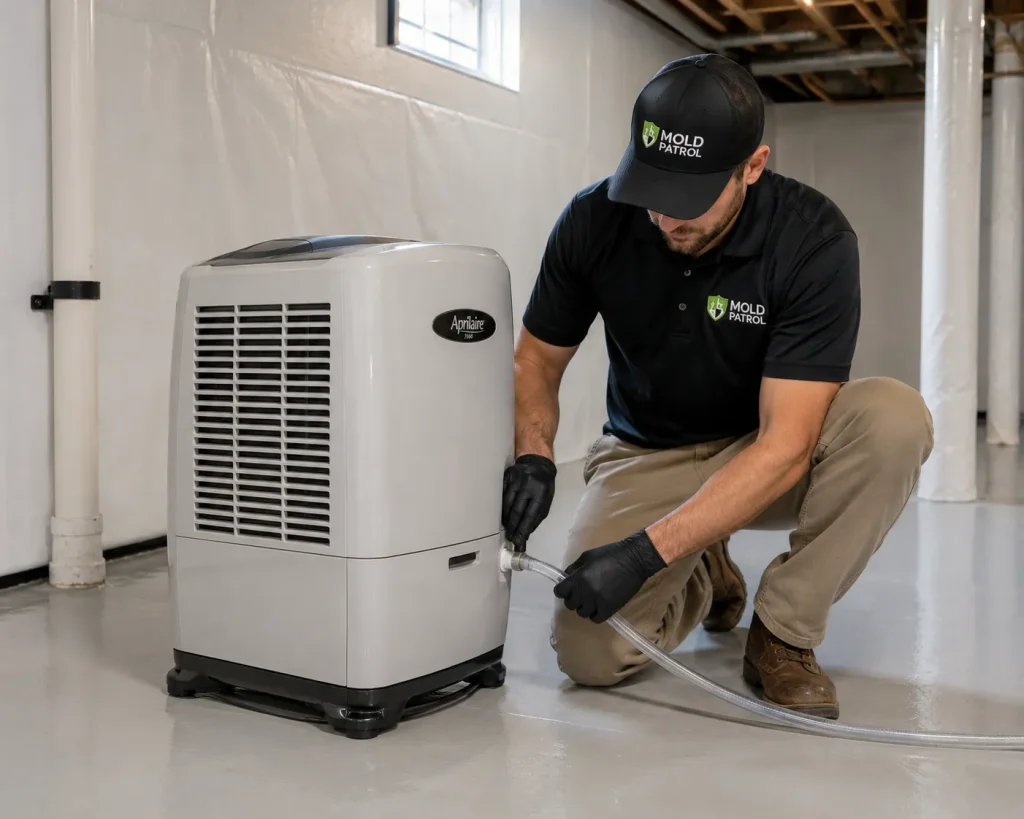
If the house regularly feels damp, you’re seeing condensation, or your humidity readings remain elevated, don’t just run a portable dehumidifier forever and hope for the best. Find out why the moisture is there.
Crawl Space Moisture Can Keep Feeding the Problem Above You
For North Carolina homeowners, the crawl space deserves particular attention.
It’s easy to forget about a part of the house you rarely see. Brian says plenty of homeowners don’t think much about their crawl space until a plumber, HVAC technician, or somebody else goes underneath the property and discovers a problem that may have been developing for years.
Mold Patrol commonly sees crawl spaces without an adequate moisture-control system.
In Brian’s experience, that may mean a poor or incomplete vapor barrier, no effective dehumidification, inadequate airflow management, active leaks, damaged insulation, or a combination of several issues.
“You’ve gotta have your vapor barrier. You’ve gotta have something to handle the humidity, and you have to have something to help with airflow.”
Brian Murphy
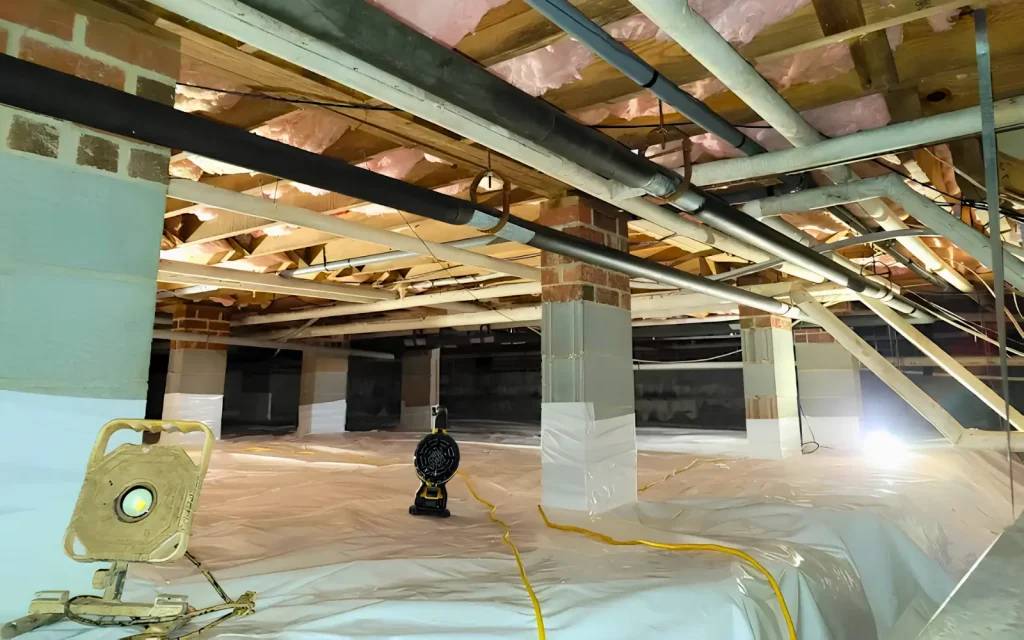
A vapor barrier has a basic but important job: it helps keep ground moisture from continually moving upward into the crawl space through evaporation.
But simply having a sheet of plastic somewhere beneath the house doesn’t mean the job is done.
Brian says a properly installed barrier should cover the soil, have its seams appropriately secured, fit around piers, and avoid leaving exposed areas that continue releasing moisture into the space.
Homeowners should also pay attention to the system as it ages.
Some of the warning signs Mold Patrol looks for include:
- exposed soil or incomplete vapor-barrier coverage;
- torn, degraded or separated vapor-barrier material;
- active plumbing or other water leaks;
- damp, sagging or fallen insulation;
- excessive humidity or visible condensation;
- disconnected or damaged ductwork;
- a crawl-space dehumidifier that isn’t operating or draining correctly.
One mistake Brian has encountered is homeowners simply closing their crawl-space vents in an attempt to make the space “sealed” without addressing everything else the new environment requires.
That can backfire.
If air movement changes but moisture remains uncontrolled, a homeowner may inadvertently create an environment where moisture becomes trapped rather than managed.
The Crawl Space and the Rest of Your Home Aren’t Separate Worlds
This matters because the crawl space isn’t necessarily isolated from the living area.
In many homes around Burlington and Greensboro, HVAC equipment and ductwork run beneath the house. Air and moisture movement within the building can connect conditions below the floor with what’s happening above it.
So if mold keeps coming back inside the living space, especially alongside musty odors, damp conditions, HVAC concerns or high humidity, it can be worth looking underneath the home rather than focusing only on the room where the symptoms appear.
Our guide to crawl space moisture problems explains that building-science connection in more detail.
And if there’s already visible contamination beneath the home, Mold Patrol provides crawl space mold removal and remediation that addresses the mold alongside the conditions allowing it to grow.
Brian also recommends periodic professional inspections of crawl spaces, particularly where moisture-control systems are already installed. The aim is to catch leaks, damaged barriers, drainage failures, disconnected ductwork or equipment problems before they develop into something much larger.
If your crawl space smells musty, stays damp, has damaged insulation, or hasn’t been checked in years, it’s worth finding out what’s happening underneath the home before the problem gets bigger.
Basements, Roof Leaks and Hidden Water Damage Can Be Easy to Miss
The mold you see and the moisture source that caused it aren’t always sitting right next to each other.
That can make recurring mold especially confusing.
You might repeatedly clean one wall and assume the problem originates in that room. But water moves through buildings. Moisture can travel along materials, through wall assemblies, downward from roof areas, or into basements through drainage and foundation-related pathways.
Brian says Mold Patrol typically finds the heaviest mold growth closer to elevated moisture conditions, but identifying exactly where that moisture started still requires looking beyond the visible patch.
Roof leaks are a good example.
“If there is a roof leak or flashing failure or some other intrusion, if the moisture is high enough for a long enough period of time, it can definitely cause elevated mold growth.”
Brian Murphy
Water entering around a roof doesn’t necessarily stay in one convenient, visible spot. As Brian notes, it travels downward and can eventually create problems within the interior building envelope.
The same principle applies at the bottom of the house.
In basements, Brian says Mold Patrol finds moisture entering for many different reasons: improper exterior drainage, plumbing leaks, water-heater leaks, HVAC condensate-line problems and other sources.
And sometimes there isn’t just one.
“If you address, you know, eight out of 10, those two that you don’t address will continue to bring moisture into the area and kind of undo the work that you’re doing.”
Brian Murphy
That’s why partial correction can lead to a partial result.
You might repair one plumbing leak while exterior drainage continues wetting the structure. Or fix drainage while missing an HVAC condensate issue.
If mold keeps coming back, it can be a sign that one part of the moisture picture still hasn’t been found.
Wet Materials Need Attention Quickly
The timing matters too.
The EPA advises that after a water leak or spill, damp or wet materials should generally be dried within 24 to 48 hours. When materials are dried within that timeframe, the agency says mold will usually not grow.
See the EPA’s moisture and mold prevention recommendations
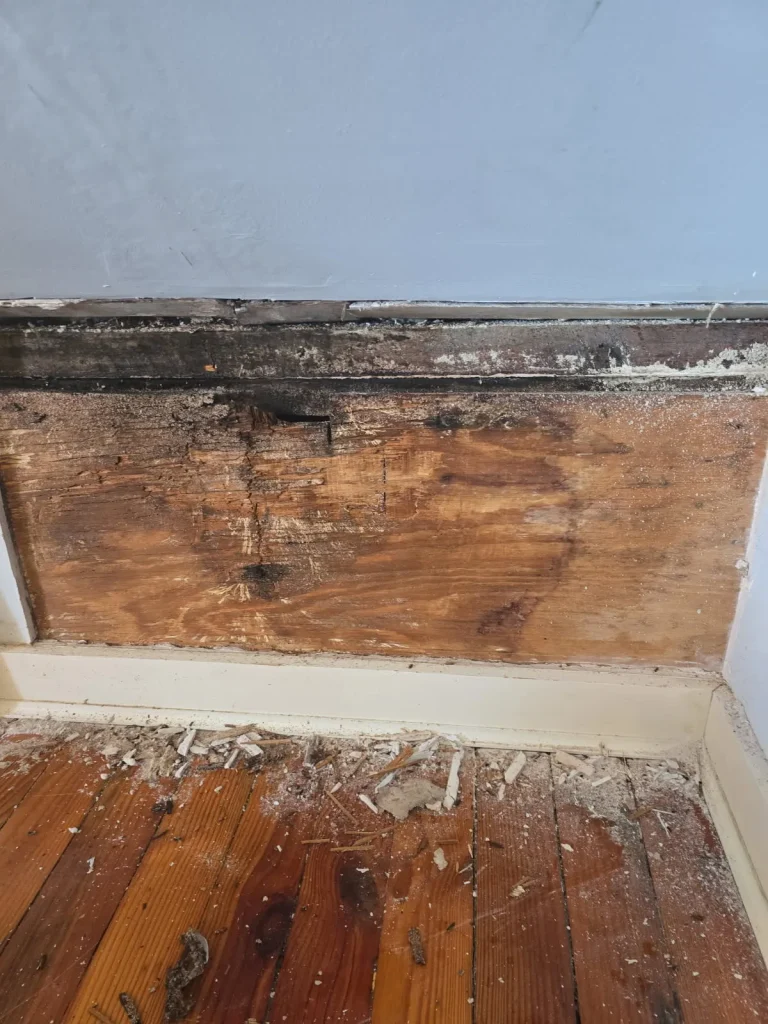
That makes “the leak has stopped” different from “everything the leak affected is dry.”
Drywall cavities, insulation, flooring assemblies, cabinets, framing and other materials can sometimes retain moisture after the surface appears fine.
Water intrusion itself is hardly unusual. According to the U.S. Census Bureau and U.S. Department of Housing and Urban Development’s 2023 American Housing Survey, 11.8 million of the 133.2 million occupied U.S. housing units surveyed reported water leakage from outside the home. Another 11.2 million reported leakage originating inside the home.
View the 2023 American Housing Survey housing-quality data
That doesn’t mean every leak becomes a mold problem. It does show why moisture investigation is such a practical part of caring for a building.
For a closer look at below-grade issues, read our guide to common causes of basement moisture. If the problem seems less obvious, our guide to signs of hidden water damage explains what can be happening behind finished surfaces.
If you’ve had a roof leak, plumbing failure, basement intrusion or unexplained water staining, don’t assume the problem ended when the visible water disappeared. Make sure the affected area is actually dry and the source has been corrected.
What a Lasting Mold Solution Actually Looks Like
So, what do you do when mold keeps coming back?
You start by stepping away from the assumption that the visible growth tells you everything you need to know.
Brian describes Mold Patrol’s inspection approach simply:
“We’re not only looking for physical evidence of mold growth, but we’re looking for the conditions that are conducive to mold growth.”
Brian Murphy
That may involve looking at relative humidity, visible water damage, moisture intrusion, leaks, crawl-space conditions, basement conditions, HVAC-adjacent areas, drainage, ventilation and the history of the property.
From there, the actual solution depends on what’s found.
A crawl-space moisture problem isn’t automatically solved the same way as a roof leak.
An HVAC condensate-line failure isn’t the same as exterior drainage pushing water toward a basement.
Excessive humidity throughout a home requires different thinking from one localized plumbing leak.
That’s why good mold remediation isn’t a one-size-fits-all product or treatment.
The sequence matters.
First, understand where the moisture is coming from.
Then understand how far the mold or moisture problem extends.
Correct the source or put appropriate moisture-management measures in place.
Remediate affected materials properly where remediation is needed.
Then monitor the conditions that matter so a small future problem doesn’t have years to develop unnoticed.
Brian is very supportive of homeowners being proactive. Where he urges caution is when somebody tries to tackle a complicated mold and moisture situation without understanding the whole building.
There’s nothing wrong with checking humidity, inspecting visible plumbing, keeping gutters functioning, watching for condensation, or looking periodically at an accessible crawl space.
Those are smart habits.
The problem comes when one DIY fix creates the assumption that every contributing condition has now been solved.
Catch Small Problems While They’re Still Small
One of Brian’s strongest recommendations is remarkably simple: pay attention to the building.
“Frequent inspections are key to keeping small problems, small problems.”
Brian Murphy
A slow plumbing leak caught quickly is different from one that has been wetting a wall cavity for two years.
A vapor-barrier tear identified during an inspection is different from years of uncontrolled ground moisture.
A condensate line caught before it creates widespread high humidity is different from discovering mold across furniture and building materials later.
The longer moisture problems continue unnoticed, the more materials can become involved and the more complicated the solution tends to become.
That’s why the goal isn’t to make homeowners worried about every drop of water. It’s to make the warning signs understandable.
If mold comes back, there’s a reason.
If a room keeps feeling damp, there’s a reason.
If the crawl space is wet, there’s a reason.
If an HVAC register repeatedly develops discoloration or condensation, there’s a reason.
Find the reason, and you can make a sensible plan.
That philosophy sits at the heart of Mold Patrol’s mold remediation services. Mold Patrol specializes in mold, moisture and indoor air quality rather than treating mold as an add-on to unrelated restoration work.
For homeowners, property managers and commercial clients looking for professional mold remediation in Greensboro, that means the process looks beyond what’s visible and considers what’s happening with the property as a whole.
If you’re tired of treating the same mold problem more than once, Mold Patrol can help you work out what’s actually feeding it, what needs to be remediated, and what conditions need to change.
Stop Treating the Same Symptom Over and Over
When mold keeps coming back, it’s easy to feel like you’re right back where you started.
But recurring mold gives you useful information.
It tells you that something may still be creating the conditions mold needs to grow.
That could be excessive relative humidity. It could be condensation. It could be a crawl-space issue, basement moisture, a hidden plumbing leak, drainage, a roof problem, or moisture associated with the HVAC system.
Sometimes it’s more than one thing.
The important part is to look past the visible patch and understand the building around it.
The earlier a moisture condition is found, the better the chance of addressing it before it turns into a larger and more disruptive remediation project.
If mold keeps coming back in your Burlington or Greensboro home, rental property or commercial building, you don’t have to keep guessing.
Mold Patrol can inspect the affected area, investigate the moisture conditions, explain what’s happening in plain English and help you understand the next right step.
The goal isn’t another temporary cleanup.
It’s to find the root cause and deal with the problem properly.