
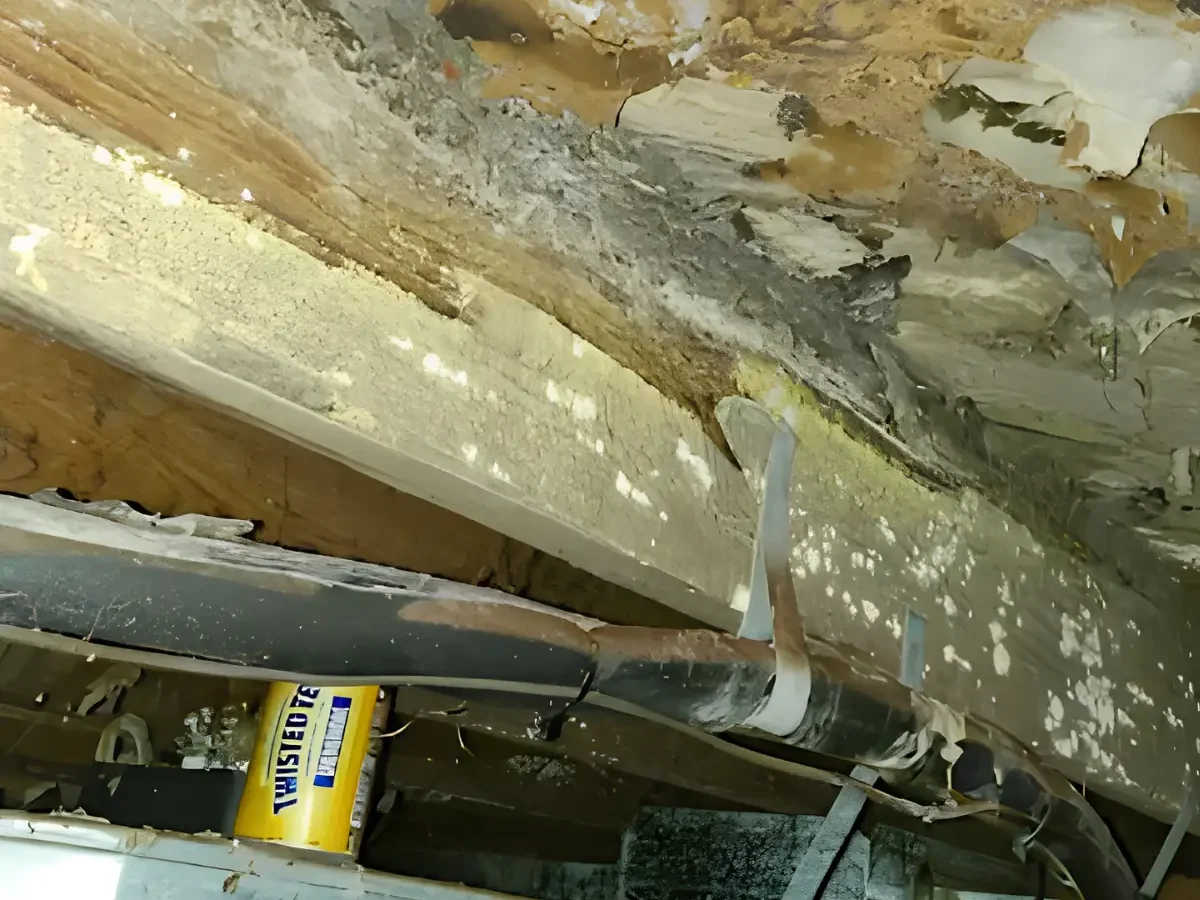
Crawl Space Moisture
Most homeowners don’t spend much time thinking about what’s underneath their house.
That’s understandable. Your crawl space isn’t somewhere you walk through every day, and unless there’s an obvious problem, it’s easy for it to become out of sight, out of mind.
The trouble is that crawl space moisture doesn’t need your attention to keep developing.
Mold Patrol co-owner Brian Murphy regularly sees properties where a homeowner had no idea anything was wrong until a plumber, HVAC technician, or another contractor went underneath the home.
“People don’t generally think about their crawl space until someone… goes under there and they go, ‘Wow. You got a really big problem.”
Brian Murphy
By then, the conditions may have been there for years.
The good news is that crawl space moisture can be managed. The first step is understanding where the moisture is coming from and making sure the entire system underneath the home is working together.
- Why Crawl Spaces Get Moist in the First Place
- What a Crawl Space Vapor Barrier Actually Does
- Why Closing the Crawl Space Vents Isn’t Automatically the Answer
- Why Crawl Space Moisture Can Matter Inside the Home
- What Homeowners Should Check in Their Crawl Space
- Keep the Crawl Space Clean, Dry and on Your Radar
Why Crawl Spaces Get Moist in the First Place
There isn’t one single cause of crawl space moisture.
Sometimes there’s an active leak. Sometimes the soil underneath the home is continually releasing moisture into the crawl space. In other cases, relative humidity stays elevated, condensation develops, or the home simply doesn’t have an adequate system for controlling moisture.
Brian says that’s one of the most common patterns Mold Patrol sees during crawl-space inspections.
“You’ve gotta have your vapor barrier. You’ve gotta have something to handle the humidity, and you have to have something to help with airflow.”
Brian Murphy
In his experience, many crawl spaces they inspect either don’t have an adequate vapor barrier or don’t have effective humidity control in place.
That doesn’t mean every crawl space needs exactly the same solution.
It means you need to look at the conditions as a whole.
Potential causes of crawl space moisture can include exposed soil, damaged vapor-barrier material, high humidity, plumbing leaks, condensation, drainage problems, or dehumidification equipment that isn’t working or draining properly.
Humidity by itself matters.
The U.S. Environmental Protection Agency recommends keeping indoor relative humidity below 60% where possible and ideally between 30% and 50% to help reduce moisture conditions that support mold growth. You can read more in the EPA’s mold and moisture guidance.
And that brings us back to the bigger principle behind why mold keeps coming back: cleaning mold without changing the conditions that support it can leave you right back where you started.
If your crawl space feels damp, has visible condensation, or you’re not sure what moisture controls are in place, get the conditions checked before guessing at the solution.
What a Crawl Space Vapor Barrier Actually Does
A vapor barrier sounds simple enough.
Plastic goes on the ground. Moisture stays underneath it.
That’s the basic idea, but how the barrier is installed makes a big difference.
It’s Not Just Plastic on the Ground
Brian describes the purpose this way:
“The purpose of the vapor barrier is to keep moisture on the ground and to keep it from coming up through the natural process of evaporation or condensation and attaching to the underside of the home.”
Brian Murphy
Soil naturally contains moisture. Without a barrier, some of that moisture can move upward into the crawl-space environment.
For the barrier to do its job effectively, Brian says Mold Patrol looks for complete soil coverage. Seams should be joined properly, material should be secured around piers, and you shouldn’t have large areas of exposed soil continuing to release moisture into the space.
That’s why seeing some plastic underneath the home doesn’t necessarily tell you whether the crawl space is protected.
Vapor Barriers Can Deteriorate Too
Mold Patrol also sees older barriers that have degraded, torn, separated at the seams, or simply weren’t installed adequately in the first place.
Brian says typical construction-grade material he encounters is often around four to six mil thick, while Mold Patrol’s standard installation uses 10-mil material.
That’s Mold Patrol’s installation standard, not a blanket requirement for every building. The larger point is that the condition and coverage of the barrier matter, not simply whether one exists.
A barrier should also be inspected over time. Tradespeople can damage it while working beneath a home. Seams can separate. Equipment can fail. Plumbing can begin leaking.
If mold growth is already present underneath the property, crawl space mold removal and remediation may need to address both the contamination and the moisture conditions allowing it to develop.
If you can see exposed soil, torn material, separated seams, or a vapor barrier that looks like it’s seen better days, don’t assume it’s still doing its job just because it’s there.
Why Closing the Crawl Space Vents Isn’t Automatically the Answer
One DIY approach Brian sees fairly often is homeowners closing up crawl-space vents because they’ve heard that sealing the space will help with humidity.
The problem isn’t necessarily the idea of a controlled crawl space.
The problem is doing one part of a moisture-control system without dealing with everything else.
“We see a lot of homeowners that will attempt to close their vents up themselves and create somewhat of a sealed system, but they’re not doing it correctly.”
Brian Murphy
If you close vents while moisture is still entering from exposed soil, an active leak, poor drainage, or another source, you haven’t removed that moisture.
You’ve changed the environment around it.
That’s why crawl space moisture needs to be approached as a system rather than a single product or quick modification.
Depending on the property, that may mean looking at the vapor barrier, relative humidity, airflow, dehumidification, insulation, drainage, plumbing, and mechanical equipment together.
Our guide to how relative humidity affects mold growth goes deeper into why controlling moisture in the air is such an important part of preventing recurring mold conditions.
Before closing vents, installing equipment, or making major changes underneath the home, make sure you know what moisture sources you’re actually trying to control.
Why Crawl Space Moisture Can Matter Inside the Home
It’s tempting to think of the crawl space as separate from the rest of the house.
It isn’t always that simple.
Around Burlington, Greensboro, and surrounding North Carolina communities, Brian says Mold Patrol commonly sees homes where the air handler and ductwork are located beneath the property.
That means the HVAC system and the crawl space can occupy the same environment.
If ductwork becomes disconnected, insulation is damaged, humidity is excessive, or mold contamination develops underneath the home, it makes sense to look at those conditions as part of the wider building rather than an isolated space nobody uses.
“If you have a contaminated crawl space, you will eventually, that contamination will make its way into your living space.”
Brian Murphy
That’s one reason a crawl-space inspection may make sense when homeowners notice problems such as persistent musty odors, recurring mold, damp conditions, or issues around their HVAC system.
It doesn’t mean every indoor mold problem starts in the crawl space.
Brian’s whole approach is the opposite of making that kind of assumption.
Mold Patrol looks for the source.
Sometimes it’s underneath the home. Sometimes it’s an interior plumbing leak, condensation, roof intrusion, or another form of hidden water damage.
The important thing is to follow the evidence rather than choosing a cause first and trying to make everything fit it.
Understanding relative humidity inside your home can also help you spot moisture conditions before they become obvious visually.
If you’ve got a damp crawl space along with recurring odors, mold, insulation problems, or HVAC concerns, look at the property as one system instead of treating each symptom separately.
What Homeowners Should Check in Their Crawl Space
You don’t need to become a crawl-space expert.
But somebody should be paying attention to what’s happening underneath the house.
Brian recommends having the crawl space professionally inspected at least once a year so problems can be found while they’re still manageable.
“Frequent inspections are key to keeping small problems, small problems.”
Brian Murphy
When Mold Patrol checks a crawl space, some of the things worth looking for include:
- active plumbing or water leaks;
- visible mold or unusual staining;
- wet, damaged, sagging, or fallen insulation;
- standing water or condensation;
- exposed soil;
- torn vapor-barrier material;
- separated vapor-barrier seams;
- disconnected or damaged ductwork;
- a dehumidifier that isn’t operating properly;
- drainage problems with the dehumidifier;
- persistent musty odors.
The reason for checking regularly is simple.
A small leak found early is different from a leak that’s been wetting building materials for two years.
A torn vapor barrier that’s repaired promptly is different from years of uncontrolled ground moisture.
A failing dehumidifier noticed now is different from discovering widespread humidity-related mold later.
That’s the same root-cause thinking behind fixing the conditions that allow mold to return.
You’re not waiting until the problem becomes impossible to ignore.
You’re looking for the conditions that create the problem in the first place.
If you’d rather not crawl underneath your home yourself – or you’ve already seen something that doesn’t look right – Mold Patrol can inspect the space and explain what needs attention and what doesn’t.
Keep the Crawl Space Clean, Dry and on Your Radar
Crawl space moisture isn’t automatically solved by installing one product.
A vapor barrier may be important. A dehumidifier may be important. Airflow, drainage, insulation, leak repair, and HVAC conditions may all matter too.
What matters most is understanding your particular crawl space.
Brian puts the goal simply:
“As long as you have those systems in place and you stay on top of that… you stay clean, dry, and safe.”
Brian Murphy
Paying attention to your crawl space isn’t about giving yourself another thing to worry about.
It’s about catching manageable problems before they turn into bigger, more expensive ones.
If you’re in Burlington, Greensboro, or a nearby North Carolina community and you’re concerned about crawl space moisture, mold, your vapor barrier, insulation, or related HVAC conditions, Mold Patrol can inspect what’s happening underneath your home and help you understand the right next step.