Mold and Children
Finding mold anywhere in your home can be unsettling. Finding it in a bedroom, playroom, bathroom, basement, or another space your child uses every day can make the situation feel a lot more urgent.
Parents naturally want to know whether the mold could be affecting their child.
The important thing is not to jump from “there’s mold in the house” to “mold must be causing these symptoms.” Mold can contribute to respiratory or allergic symptoms in some people, but those same symptoms can have many other causes.
Sean Brooks, co-owner of Mold Patrol of Greensboro, takes a careful approach when families ask about mold and children.
“Parents should pay attention to recurring congestion, coughing, worsening asthma. They shouldn’t automatically assume mold. It’s important to investigate both medically and environmentally.”
Sean Brooks
That distinction matters.
Your child’s healthcare provider is responsible for evaluating their health. Mold Patrol’s role is to investigate what’s happening inside the property — whether there’s mold, where moisture is coming from, and what building conditions may need attention.
- What Signs Might Parents Notice Around a Mold-Affected Home?
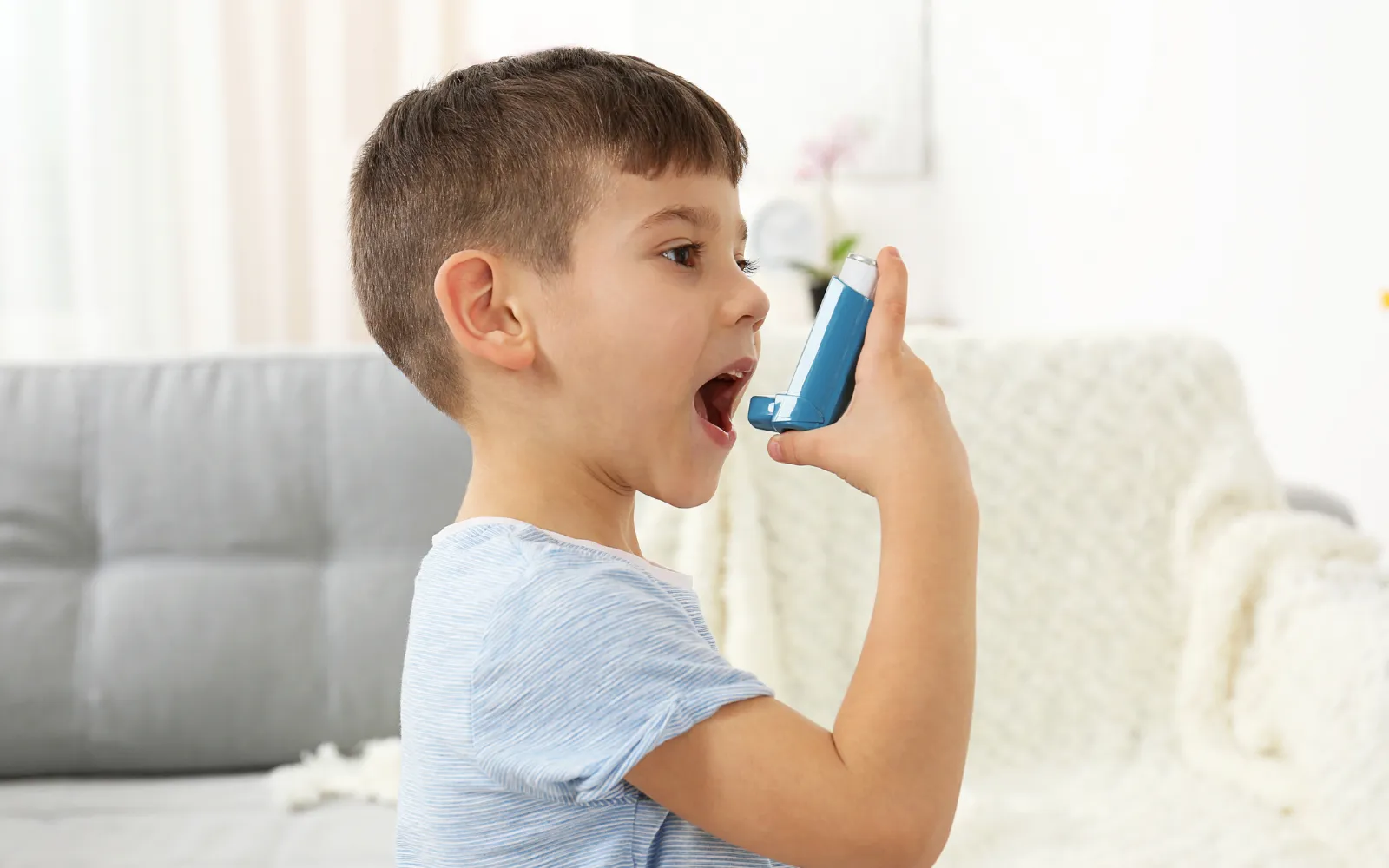
- Mold and Childhood Asthma Deserve Particular Attention
- Why One Child or Family Member May React While Others Don’t
- Look for Patterns Without Assuming Mold Is the Cause
- When Children Live in the Home, Follow the Moisture
- What Should Parents Do If They’re Concerned About Mold?
- Mold and Children: Investigate Without Jumping to Conclusions
What Signs Might Parents Notice Around a Mold-Affected Home?
There isn’t one symptom that tells you mold is affecting a child.
Sean says the concerns parents most often need to pay attention to include recurring congestion, coughing, and worsening asthma.
Other symptoms sometimes associated with mold exposure can include:
- A stuffy or runny nose
- Coughing or wheezing
- Itchy or irritated eyes
- Skin irritation
- Respiratory discomfort
The CDC notes that mold exposure can cause symptoms such as a stuffy nose, coughing or wheezing, irritated eyes, and skin rash in some people. People with asthma or mold allergies may experience stronger reactions. Read the CDC guidance on mold and health.
But none of those symptoms are unique to mold.
A child can have congestion because of seasonal allergies. A cough can have many different causes. Wheezing or worsening asthma needs appropriate medical evaluation.
That’s why Sean draws a firm line between what a remediation professional can and can’t tell a family.
“Our role isn’t really to diagnose any medical conditions. That’s for the doctors. But we can help identify moisture problems and mold growth that may be impacting the indoor environment.”
Sean Brooks
If you’re trying to understand the wider range of concerns people report, our guide to common mold exposure symptoms explains why symptoms need to be considered carefully rather than treated as proof.
If your child has persistent or worsening symptoms, start with the appropriate healthcare professional. If there’s also mold, moisture, or a musty odor at home, investigate the building too.
Mold and Childhood Asthma Deserve Particular Attention
Asthma is one area where parents may have additional reason to look closely at the indoor environment.
According to the CDC, 6.5% of U.S. children under age 18 had current asthma in 2024. See the CDC asthma data.
For a child who already has asthma, a damp or mold-affected environment may be one factor worth investigating. CDC/NIOSH says people spending time in damp buildings report respiratory problems including developing or worsening asthma, while the EPA notes that mold can trigger asthma symptoms in people who are sensitive to it.
That doesn’t mean every asthma flare-up in a home with mold was caused by mold.
Sean’s broader point is that some people are simply more susceptible than others.
“Some people may have been diagnosed with mold allergies, asthma or other conditions that make them more susceptible.”
Sean Brooks
If your child’s asthma seems to be changing, that’s a medical issue first. Their healthcare provider is the person who should evaluate whether symptoms are worsening and what may be triggering them.
At the same time, if you’ve also found mold, had a leak, noticed persistent dampness, or started smelling something musty, it makes sense to investigate the building separately.
If your child’s asthma seems harder to control and there’s also a mold or moisture concern at home, don’t try to diagnose the connection yourself. Talk to their healthcare provider and investigate the property too.
Why One Child or Family Member May React While Others Don’t
One question families often struggle with is:
“If the mold were really affecting the house, wouldn’t everyone feel it?”
Not necessarily.
Sean says different people can have very different experiences in the same environment.
“Everybody’s body is different. There are factors like age, allergies, asthma, immune health and even how much time someone spends in the affected area. That’s why two people can live in the same home and just have completely different experiences.”
Sean Brooks
There are practical differences too.
A child may spend eight or ten hours sleeping in one bedroom every night while the rest of the family spends very little time there. One child may have asthma or allergies while a sibling doesn’t. One person may spend much more time in a basement or another part of the home where moisture is present.
The fact that another family member feels fine doesn’t prove the building has no problem.
At the same time, one child having symptoms doesn’t prove mold is the cause.
That’s why it’s more useful to deal with the two questions separately: What is happening with your child’s health, and what is happening inside the home?
Don’t use another family member’s lack of symptoms as your only test of whether the property needs attention. Mold and moisture can be assessed based on what’s actually happening in the building.
Look for Patterns Without Assuming Mold Is the Cause
Sometimes parents notice that symptoms seem different depending on where their child is spending time.
Sean says some Mold Patrol clients describe feeling better after leaving the house and worse again when they return.
“If your symptoms improve after spending time away from the house, like at work or on vacation, and then return when you come home, it may be worth looking at the indoor environment. It’s not proof that mold is the cause, but it’s enough to justify an inspection.”
Sean Brooks
For a parent, useful questions might include:
- Did symptoms change around the same time as a leak or water problem?
- Is there a persistent musty odor in the home?
- Is one bedroom, basement, or other area noticeably damp?
- Has there been recurring condensation?
- Is there visible growth?
- Do symptoms seem different when your child spends time away from the property?
The goal isn’t to run your own experiment or try to diagnose a mold-related illness.
It’s simply to notice patterns that may justify asking better questions.
A pattern can tell you it’s time to investigate. It can’t give you a diagnosis. If something seems tied to the home, look at both the health concern and the indoor environment.
When Children Live in the Home, Follow the Moisture
When parents discover mold, they understandably focus on what they can see.
Sean focuses first on what allowed it to grow.
“Moisture is the main thing. That’s what causes mold.”
Sean Brooks
Depending on the home, that moisture might come from:
- A roof leak
- Plumbing problems
- Crawlspace moisture
- Basement dampness
- HVAC condensation
- Drainage issues
- High indoor humidity
- Poorly ventilated bathrooms
That’s why Mold Patrol doesn’t look only at the obvious patch.
Sean describes the inspection process as starting outside the property, looking at drainage and other building conditions, then moving inside and checking areas such as the attic or crawlspace when appropriate.
And the place where you see mold isn’t always where the water problem began.
Brian Murphy, owner and founder, describes Mold Patrol’s broader philosophy this way:
“Mold is the symptom, but you’ve got to think about the origin or the cause. Because if you’re not addressing the origin or the cause, the symptom is going to return.”
Brian Murphy
For a family with children, that root-cause approach matters. Wiping off visible mold while leaving the same damp conditions in place doesn’t solve the underlying building problem.
Mold Patrol provides professional mold inspections and testing to help identify mold, moisture conditions, and what needs to happen next.
If you’ve found mold in an area your child regularly uses, don’t stop at cleaning what you can see. Find out where the moisture came from and whether anything else in the property needs attention.
What Should Parents Do If They’re Concerned About Mold?
If you’re worried about mold and children, you don’t need to solve everything yourself.
A sensible process looks like this:
1. Take health concerns to the right professional
If your child has persistent, severe, or worsening symptoms, speak with their healthcare provider.
A mold remediation company shouldn’t diagnose a child or tell you what caused their symptoms.
2. Don’t rely on an online symptom checklist
Reading that coughing, congestion, or irritated eyes can occur around mold doesn’t tell you what’s causing those symptoms in your child.
Use symptom information as context, not a diagnosis.
3. Write down what you know about the property
Think about recent leaks, water damage, musty odors, visible growth, condensation, damp areas, or recurring humidity problems.
That information can help an inspector understand where to start.
4. Have the building assessed when there’s reason for concern
Sean’s approach is to look at the property as a whole rather than assuming the obvious patch tells the full story.
5. If remediation is needed, control the work properly
Mold remediation can involve disturbing affected materials, which is why containment matters.
Sean describes Mold Patrol using airtight containment, HEPA vacuums, air scrubbers, negative pressure, controlled removal, detailed cleaning, and post-remediation evaluation when the project requires those measures.
The purpose is to control the work rather than spread the problem into unaffected areas.
Mold Patrol’s approach to mold remediation that addresses the source is built around solving both the contamination and the moisture problem behind it.
For local families, Mold Patrol also provides professional mold remediation in Greensboro and surrounding communities.
If you’ve got children at home and a mold or moisture problem has you concerned, Mold Patrol can help you understand the building side of the situation and what needs to happen next.
Mold and Children: Investigate Without Jumping to Conclusions
When it comes to mold and children, parents don’t need more fear.
They need useful information.
Mold can contribute to respiratory or allergic symptoms in some people, and damp indoor environments can be relevant when a child already has asthma. But symptoms alone can’t tell you that mold is responsible.
Sean’s advice is simple:
“It’s important to investigate both medically and environmentally.”
Sean Brooks
Don’t panic. Don’t dismiss the concern. And don’t try to diagnose it yourself.
Your child’s healthcare provider can help you understand what’s happening medically.
Mold Patrol can help answer the building questions: Is there mold? Is moisture present? Where is it coming from? How extensive is the problem? What needs to happen so it doesn’t keep coming back?
That gives you something much more useful than guesswork: a clear understanding of what’s happening in the home and a practical next step.