Black Mold Myths
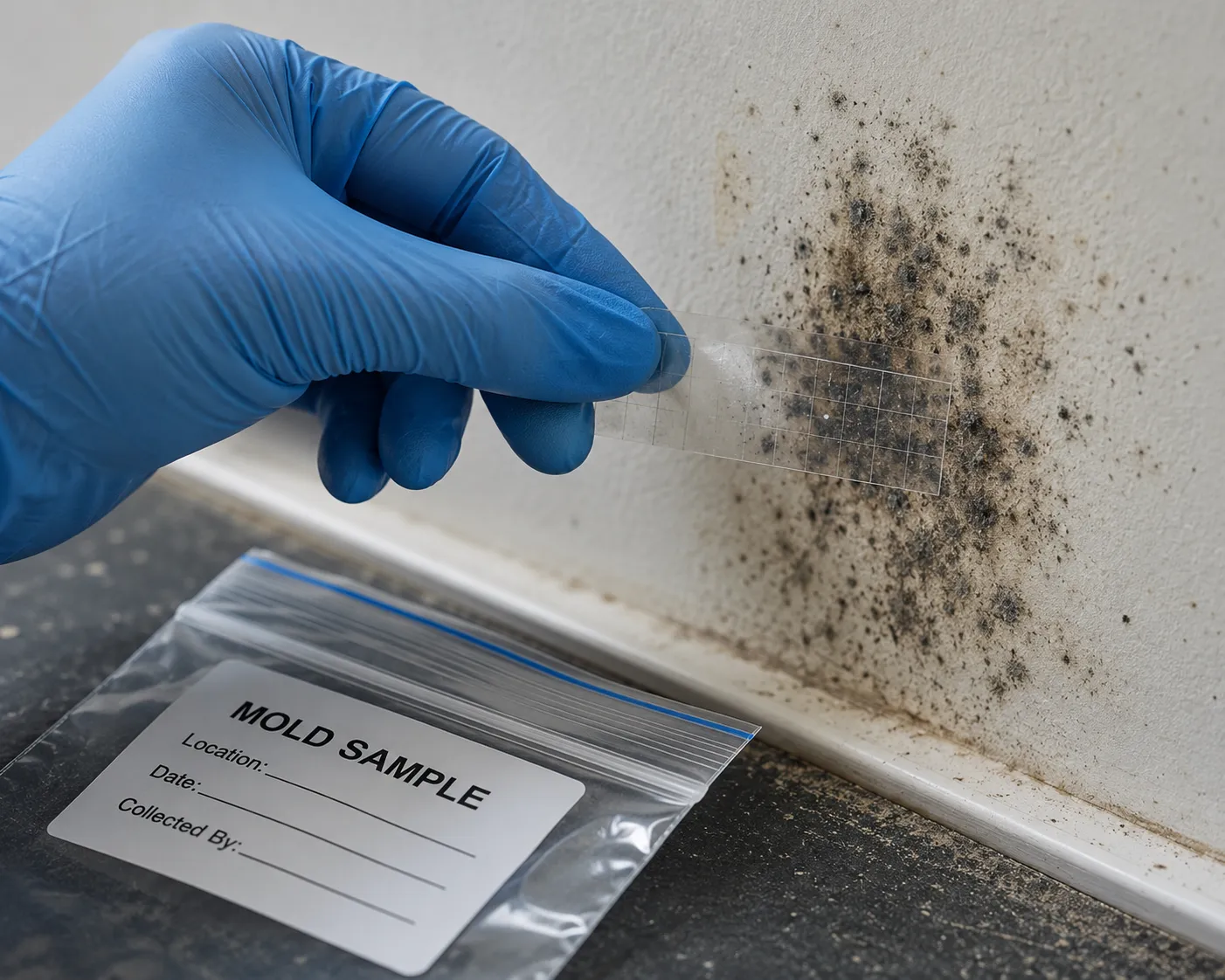
You move a cabinet, look behind a piece of drywall, or check a damp corner of the basement and see dark, almost black growth.
For a lot of homeowners, the first thought is immediate: “Is that toxic black mold?”
It’s understandable. Black mold has been talked about in news stories, social media posts, and health discussions for years, often in ways that make any dark-colored mold seem like an emergency.
But color doesn’t tell you nearly as much as people think it does.
“One of the biggest myths is that black mold is automatically more dangerous than every other mold.”
Sean Brooks
Sean Brooks, co-owner of Mold Patrol of Greensboro, says the more useful questions are usually about why the mold is growing, how extensive it is, and what needs to be done about the moisture problem behind it.
So rather than assuming the worst (or ignoring a problem because it doesn’t look scary enough) here are some of the biggest black mold myths homeowners should understand.
- Myth #1: Any Black-Colored Mold Is “Toxic Black Mold”
- Myth #2: Black Mold Is Automatically More Dangerous Than Every Other Mold
- Myth #3: If the Mold Isn’t Black, It’s Nothing to Worry About
- Myth #4: You Always Need to Know the Exact Species Before You Can Do Anything
- What Actually Matters When You Find Black Mold?
- Black Mold Myths: Focus on the Building, Not Just the Color
Myth #1: Any Black-Colored Mold Is “Toxic Black Mold”
One of the first problems with the phrase “black mold” is that it’s used as though it describes one specific thing.
It doesn’t.
The EPA explains that molds can appear in many colors and that “black mold” isn’t a particular species or specific type of mold. The term is sometimes used when people are talking about Stachybotrys chartarum or molds that may be capable of producing mycotoxins, but you can’t make that identification simply from color. See the EPA’s explanation of mold color.
Sean sees that confusion regularly.
“You don’t really know what kind of mold it is technically until you get it tested. So just because it looks black doesn’t mean that it’s the black mold everyone’s so scared of.”
Sean Brooks
A dark patch may be worth investigating. What it doesn’t give you is a laboratory identification just by looking at it.
Color alone can’t reliably tell you:
- The exact mold species
- Whether mycotoxins are being produced
- How extensive the contamination is
- Whether there’s hidden mold elsewhere
- How a particular person may respond to the environment
CDC makes a similar point about Stachybotrys chartarum: it generally isn’t necessary to identify the exact type of indoor mold before taking action, because unwanted mold growth should be dealt with regardless of species. Read the CDC guidance.
If your concern started because somebody in the home has been feeling unwell, our guide to mold exposure symptoms and indoor air quality looks at that question separately.
If you’ve found black-colored growth, don’t try to diagnose it from a photo or color chart. Find out why it’s growing and how much of the property is actually affected.
Myth #2: Black Mold Is Automatically More Dangerous Than Every Other Mold
This is probably the most persistent of all the black mold myths.
People often assume that black mold sits in one category (“dangerous”) while green, white, brown, or other molds somehow sit in another.
Sean doesn’t look at a property that way.
“Just because it’s a black color doesn’t mean that it’s necessarily dangerous to you, or how dangerous it is. It’s not necessarily saying it’s the worst of the worst.”
Sean Brooks
That doesn’t mean homeowners should ignore dark mold.
It means color isn’t a useful way to rank an indoor mold problem by danger.
Certain molds are capable of producing mycotoxins under certain conditions. CDC/NIOSH notes that some molds are toxigenic, meaning they can produce mycotoxins, but specifically advises that molds such as Stachybotrys chartarum should be approached in the same practical way as other molds growing inside a building. See CDC/NIOSH guidance on mold testing and remediation.
The practical questions are still:
Where’s the growth? What’s feeding it? How much material is affected? Has it spread into another part of the building? What does proper remediation require?
Don’t let the word “black” determine how seriously you take mold. If mold is growing indoors, something has created the conditions for it and that deserves attention.
Myth #3: If the Mold Isn’t Black, It’s Nothing to Worry About
The reverse misconception causes problems too.
A homeowner finds green or white growth and thinks, “At least it’s not black mold.”
But Sean’s advice is much more straightforward.
“If you have any kind of growth in your home, then it definitely needs to be addressed.”
Sean Brooks
The EPA notes that mold can occur in many colors, including black and white, and that indoor mold growth should be avoided. Mold becomes an indoor problem when spores encounter the moisture they need to grow. Read the EPA overview.
That moisture connection is far more useful than trying to decide whether one color is “good mold” and another is “bad mold.”
Brian Murphy has described Mold Patrol’s philosophy as not being symptom-focused. Mold is the visible symptom; the real question is what caused the conditions that allowed it to grow. If that origin isn’t corrected, the problem can return.
That’s why a patch that keeps coming back after somebody wipes or sprays it deserves a closer look.
A plumbing leak, roof issue, condensation problem, damp crawlspace, drainage problem, or excessive humidity can keep feeding mold growth long after the visible surface has been cleaned.
And when materials do get wet, timing matters. CDC advises cleaning and drying or removing wet items within 24–48 hours after water enters a home to help prevent mold growth. See the CDC guidance.
Whether the mold looks black, green, white, or something else, a lasting solution starts with understanding and correcting the moisture behind it.
Myth #4: You Always Need to Know the Exact Species Before You Can Do Anything
This one needs a little nuance.
Sean’s right that if you genuinely need to know which mold is present, testing is how you get useful identification rather than guessing from appearance.
“You don’t really know what kind of mold it is technically until you get it tested.”
Sean Brooks
But that doesn’t mean every visible mold problem has to sit untouched until somebody gives it a species name.
CDC says that when mold is growing in a home or other building, it generally isn’t necessary to determine exactly what type it is before dealing with it.
Both things can be true.
Testing can be useful when there’s a question it actually needs to answer. For example, the situation may involve unclear or hidden contamination, indoor air quality concerns, documentation needs, a medically sensitive occupant, or post-remediation verification.
But if you’ve got obvious mold growth sitting underneath an active leak, knowing its Latin name doesn’t make the leak any less important.
Testing should provide useful information, not become a distraction from an obvious building problem.
Mold Patrol’s mold inspections and testing are built around that approach. Testing isn’t automatically required on every property. The inspection looks at mold, moisture, indoor air quality concerns, and what information is actually needed to decide the next step.
Not sure whether you need testing? Start with the property. Mold Patrol can assess what you’re seeing and help determine whether testing would actually add something useful.
What Actually Matters When You Find Black Mold?
If you’ve found black-colored mold, it’s easy to get stuck asking:
“How dangerous is this?”
There are usually better questions to start with.
Where is the moisture coming from?
Sean puts moisture at the center of the investigation because mold doesn’t simply appear for no reason.
The EPA describes moisture control as the key to mold control and advises addressing both the mold growth and the moisture problem that allowed it to develop. See the EPA’s homeowner guidance.
How extensive is the problem?
A small visible patch may be all you can see, but that doesn’t automatically tell you what’s happening behind drywall, beneath flooring, inside cabinetry, or around another damp building material.
The EPA notes that mold can grow on hidden surfaces, including the backside of drywall, beneath carpets, behind wall coverings, and in other dark spaces where moisture is present.
Is another part of the building involved?
Around Greensboro and the surrounding Piedmont Triad, moisture problems can involve crawlspaces, plumbing, HVAC condensation, drainage, roof leaks, ventilation, or other parts of the building.
Sean summarizes the bigger issue simply:
“Any mold growing indoors because of excess moisture deserves attention.”
Sean Brooks
And if the property itself needs attention, Mold Patrol provides professional mold remediation in Greensboro for homeowners, property managers, landlords, and commercial property owners dealing with mold, moisture, testing, and indoor air quality concerns.
The goal isn’t to give the mold the scariest possible label. It’s to understand the scope, find the source, and deal with the problem properly.
Black Mold Myths: Focus on the Building, Not Just the Color
The biggest black mold myths all have something in common: they put too much importance on what mold looks like.
A black appearance doesn’t reliably identify a species. “Black mold” isn’t one specific category of mold. And growth that happens to be green, white, or another color shouldn’t automatically be dismissed.
That doesn’t mean there’s nothing to worry about.
It means there’s a better way to approach the problem.
Find the moisture. Understand the extent of the growth. Decide whether testing will provide useful information. Then address both the mold and the conditions that allowed it to grow.
That’s the approach Sean recommends instead of fear-driven assumptions.
“Just because it looks black doesn’t mean that it’s the black mold everyone’s so scared of.”
Sean Brooks
If you’ve found something in your home and you’re not sure what you’re dealing with, you don’t have to decide from a Google image search whether it’s the “bad kind.”
Mold Patrol can help you look at the property calmly, figure out what’s actually going on, and determine the next right step.